NEWS
ContactFrom Wound to Scar: What Factors Are at Play in the Skin Healing Process?
-
 admin
admin
- 14 7 月 2026
In life, it’s inevitable to have some small accidents—like cutting yourself while chopping vegetables, falling off a bike, or popping a pimple… After the wound heals, many people wonder: why do some recover smoothly while others are left with noticeable marks?
To answer this question, we need to start from the moment the wound forms, delving into the deeper layers of the skin to explore the repair process involving fibroblasts, the extracellular matrix (ECM), and the inflammatory response.
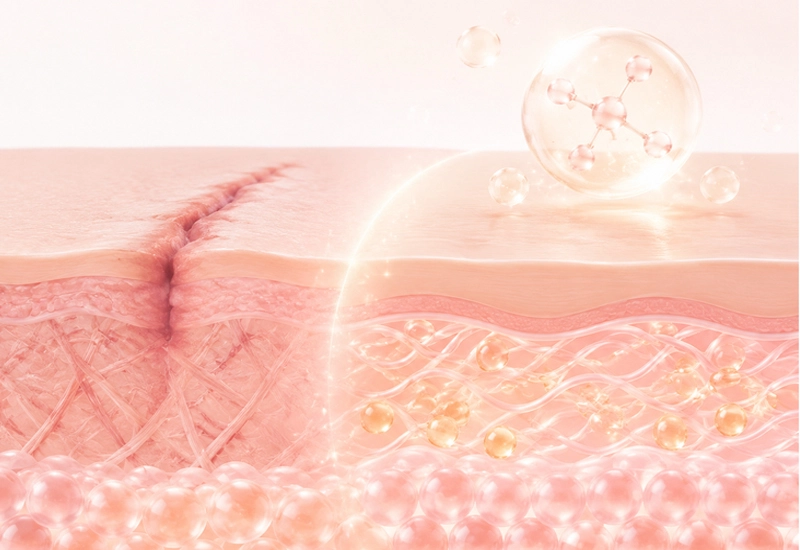
Four Stages of Skin Repair: A Precise Relay
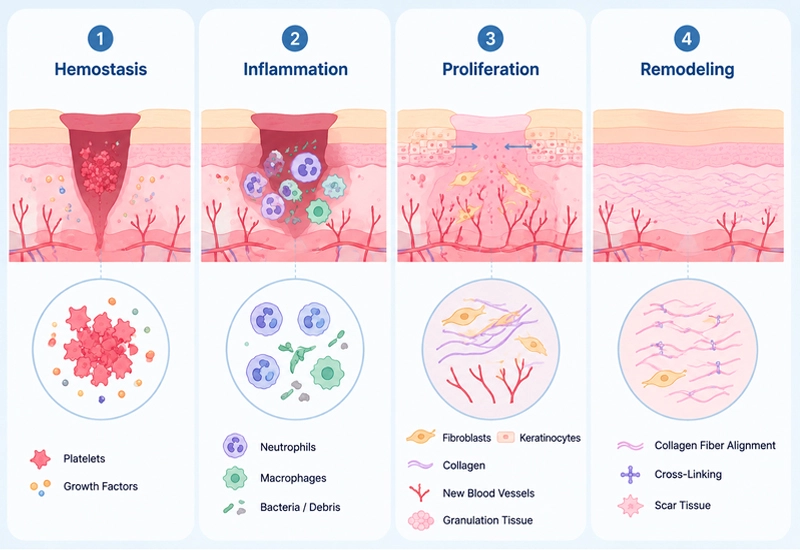
After skin injury, the stages of hemostasis, inflammation, repair, and remodeling unfold in sequence.
Step 1: Hemostasis – A few minutes after the injury, platelets gather and release signaling molecules that activate the clotting response, converting fibrinogen into fibrin to form a temporary “scaffold” that prevents blood loss and provides a landing point for subsequent cell migration.
Step 2: Inflammation – About 2 hours later, neutrophils and macrophages arrive to clear bacteria and debris, releasing signaling molecules. Inflammation needs to be moderate; excessive or prolonged inflammation can lead to more pronounced scarring.
Step 3: Repair – Fibroblasts are activated and differentiate into myofibroblasts, secreting large amounts of collagen (types I and III) and ECM proteins while also contracting the edges of the wound. New capillaries grow in, forming granulation tissue.
Step 4: Remodeling – This stage can last from several weeks to months. Myofibroblasts secrete enzymes to organize the collagen, degrading the excess while retaining the orderly arrangement, ultimately leading to cross-linking and stabilization. The appearance of the healed area is essentially determined at this stage.
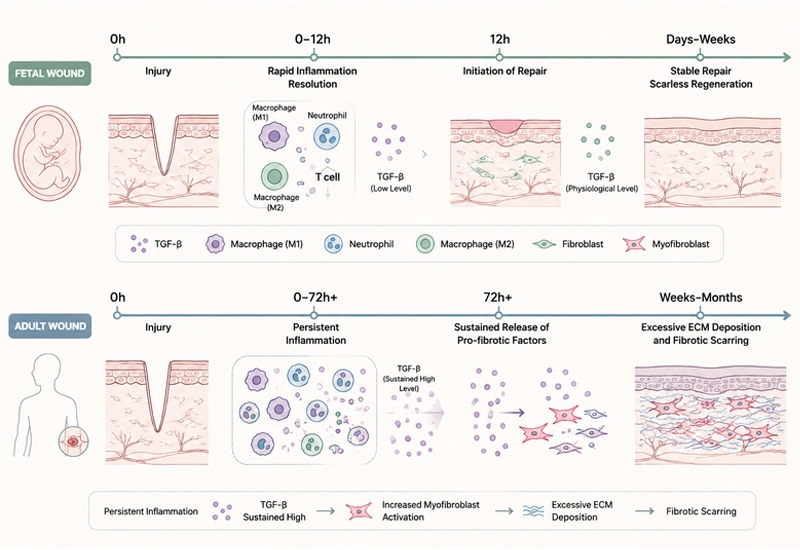
Adult vs. Fetus: Why Do Fetal Healing Scars Appear Lighter?
When injured similarly, fetal skin heals with lighter scars, while adults are more likely to leave marks. Research reveals several key differences:
1. ECM Hardness
The extracellular matrix (ECM) in fetuses is softer than in adults, allowing fibroblasts to remain “calm” and be less prone to excessive activation. The harder ECM in adults makes cells more sensitive to mechanical stress, leading to increased collagen secretion, which may result in excessive deposition.
2. Different Ratios of TGF-β Subtypes
There are three subtypes of TGF-β (Transforming Growth Factor-β): TGF-β1 and TGF-β2 promote fibroblast activation and are involved in fibrosis; TGF-β3 tends to inhibit excessive activation and promotes healing that is closer to normal skin. Fetal wounds have higher expression of TGF-β3, while adults predominantly express TGF-β1 and TGF-β2. This difference in ratios affects the quality of healing.
3. Different Polarization States of Macrophages
Macrophages exist in two states: pro-inflammatory (M1) which release inflammatory factors, and anti-inflammatory/repair (M2) which release anti-inflammatory factors and participate in repair. Fetal wounds are primarily M2, while adults have a dominant M1 response initially, which lasts longer, continuously stimulating fibroblasts and potentially leading to excessive collagen deposition.
Molecular mechanisms of scar formation
Fibroblasts → Myofibroblasts
Myofibroblasts are key executors of scar formation, expressing α-SMA which provides contractile ability, and secreting a large amount of collagen. Upon activation, the stiffer ECM promotes further differentiation of fibroblasts, making the ECM even harder, creating a positive feedback loop.
Integrins – the “mechanical sensors” of cells
Integrins are transmembrane receptors on the surface of fibroblasts that convert physical signals from the ECM into intracellular signals. Different integrins have different functions: αvβ6 activates TGF-β to promote fibrosis, α5β1 maintains homeostasis, and α1β1 binds to type III collagen, corresponding to the phenomenon of scar-free healing in fetuses.
Collagen: An Important Component of Skin Structure
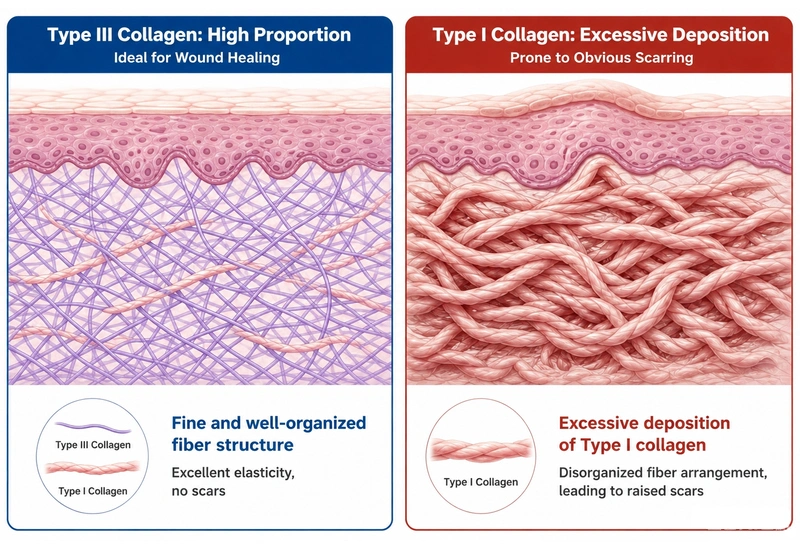
Collagen accounts for more than 75% of the dry weight of the skin. Type I collagen provides strength and is the main type found in adult skin; type III collagen is finer and softer, and is present in higher amounts in fetal and young tissues.
When the ratio of type III to type I is higher, the healed tissue is closer to the elasticity of normal tissue; when there is excessive deposition and disorganization of type I collagen, it is more prone to forming visible scars.
Scientific Skincare: General Principles Supporting the Skin’s Self-Repair
Based on the aforementioned mechanisms, daily care can refer to the following points:
1. Maintain appropriate hydration and softness of the skin—When the barrier is intact and adequately hydrated, the ECM environment is closer to a “soft” state, which is beneficial for fibroblast homeostasis.
2. Focus on collagen metabolism balance—The skin continuously synthesizes and degrades collagen. As mentioned earlier, the proportion of type III collagen has a direct impact on the quality of healing; thus, supplementing type III collagen in skincare helps provide more balanced collagen support for the skin.
3. Reduce excessive external stimuli—Factors such as ultraviolet rays, improper skincare, and mechanical friction may exacerbate local inflammation and affect the repair rhythm.
4. Choose gentle and reasonable skincare methods—Use products with mild formulations, avoid excessive exfoliation and aggressive squeezing, and allow the skin sufficient time for self-repair.
The skin is the largest organ of the human body and serves as our most direct barrier against the outside world. Each time a small wound heals, it is a “project” involving the precise cooperation of cells, matrix, and signaling molecules. Understanding this is not to induce anxiety, but to cultivate greater respect for the wisdom of the skin, promoting rational approaches in daily skincare. Scientific skincare is the greatest respect for the skin’s inherent powers.

Your Trusted Partner in Advanced Skincare Solutions
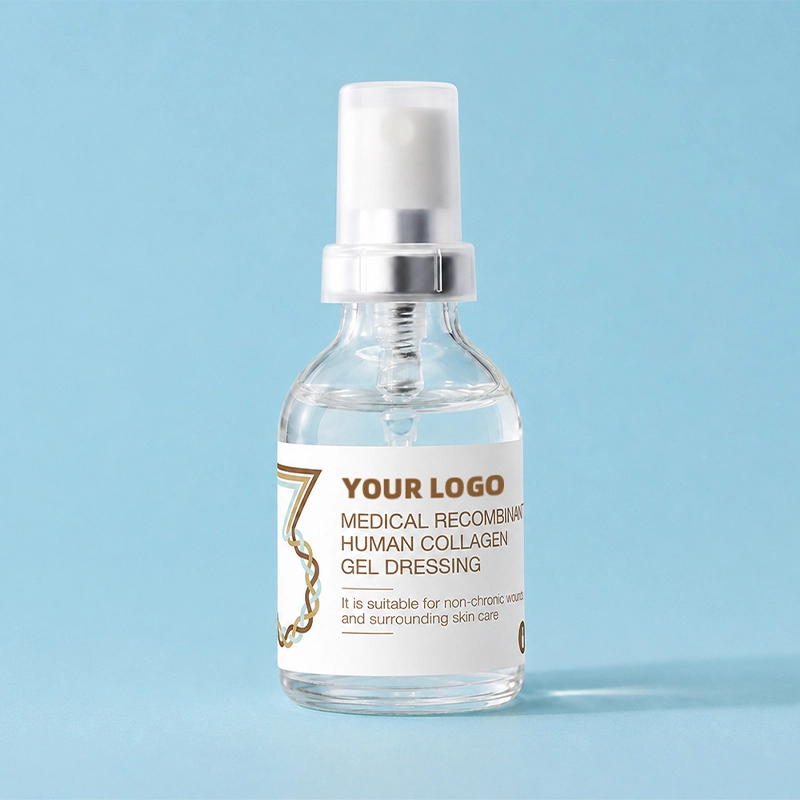
Recombinant Human Type III Collagen establishes a protective barrier to support physical restoration without causing cutaneous irritation. Free from corticosteroids and synthetic pharmaceuticals, it is especially suitable for special populations, including pregnant women and infants with dermatitis or eczema.
By forming a protective film over damaged areas, it isolates external bacteria, prevents moisture loss, and creates a moist healing environment for the wound surface. This helps stabilize the skin’s condition effectively. Featuring macromolecular weight collagen, it delivers excellent film-forming properties.
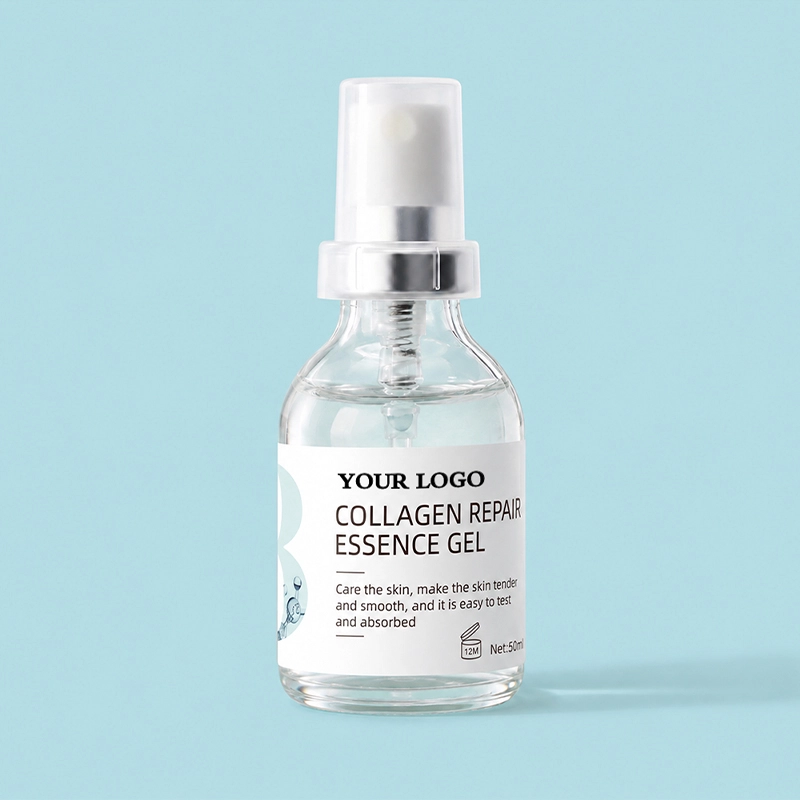
This lightweight collagen repair gel serum is designed to support skin recovery while delivering long-lasting hydration and barrier protection. Powered by recombinant human type III collagen, it helps soothe visible redness, dryness, tightness, and post-treatment discomfort while reinforcing the skin's natural barrier function.
The fast-absorbing gel texture provides an immediate burst of hydration without leaving a sticky or heavy residue. At the same time, it forms a breathable moisture-retention layer on the skin surface to help lock in hydration and support overall skin resilience, leaving the skin feeling calm, comfortable, and visibly healthier.
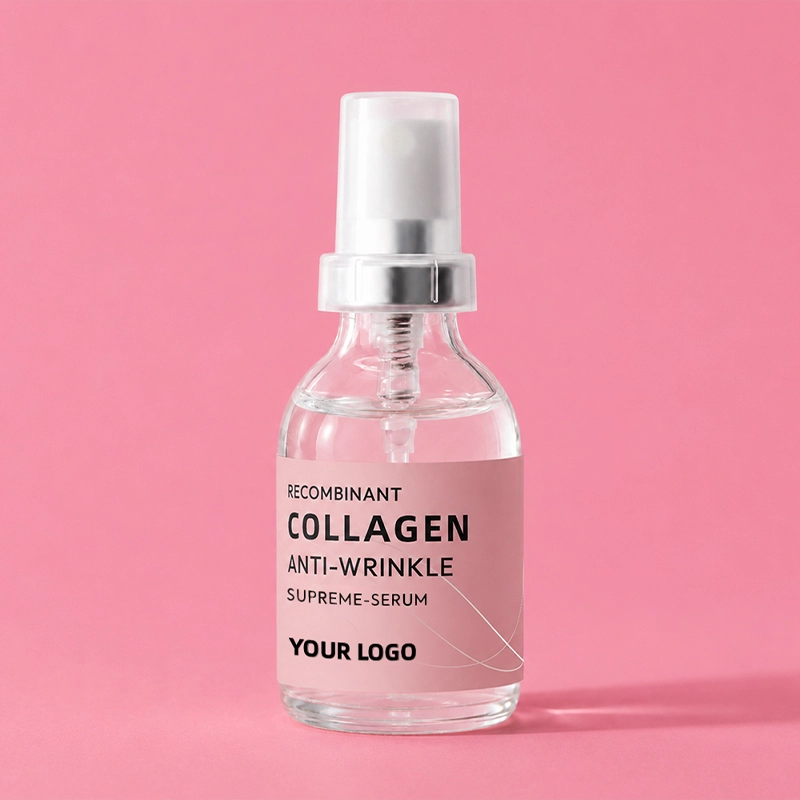
The luxurious Collagen Anti - Wrinkle Supreme+ serum, derived from precious skin essence, revitalizes skin's radiance. As we age, skin loses nutrients and collagen, becoming dry with fine lines and losing elasticity. This serum, when gently applied, deeply hydrates and offers rich nourishment. It directly replenishes collagen to boost elasticity and reduce fine lines. Ingredients like sodium hyaluronate, trehalose, and xanthan gum hydrate and reduce fine lines. Day by day, skin becomes fuller, firmer, and glows with youth.
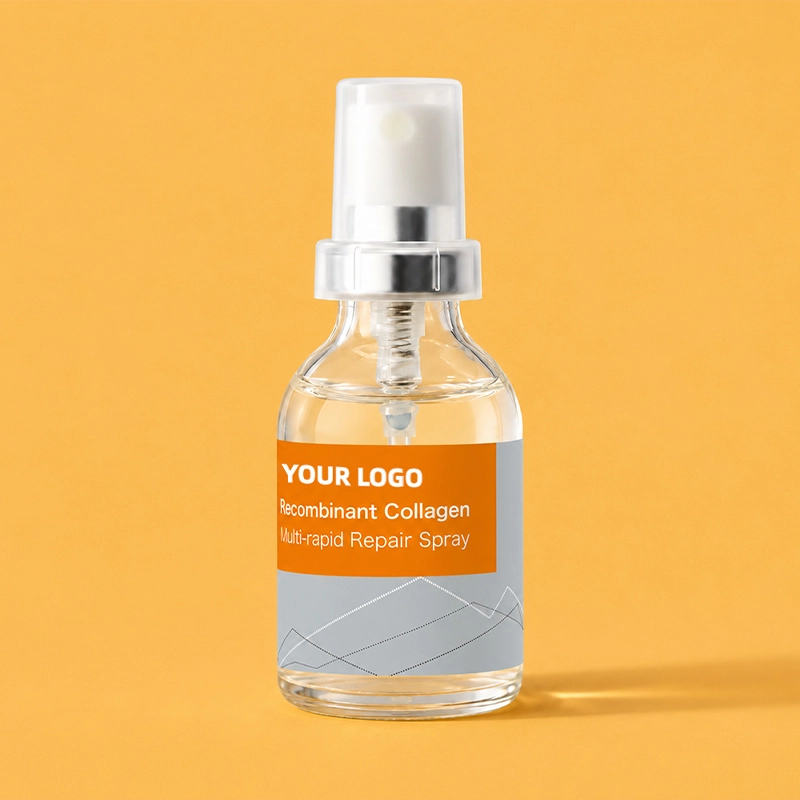
D-Nutrimec collagen Multi-recovery Serum are clinically proven to repair Skin barrier and improve the appearance of wrinkles, discolouration, firmness, and more. These concentrated anti-wrinkle serum options are designed to help prevent and correct signs of ageing.
Developed through genetic engineering and synthetic biology innovations, our clinically proven formula reduces wrinkles by 23.5% in 28 days at 0.2% concentration, validated by rigorous safety and efficacy testing.
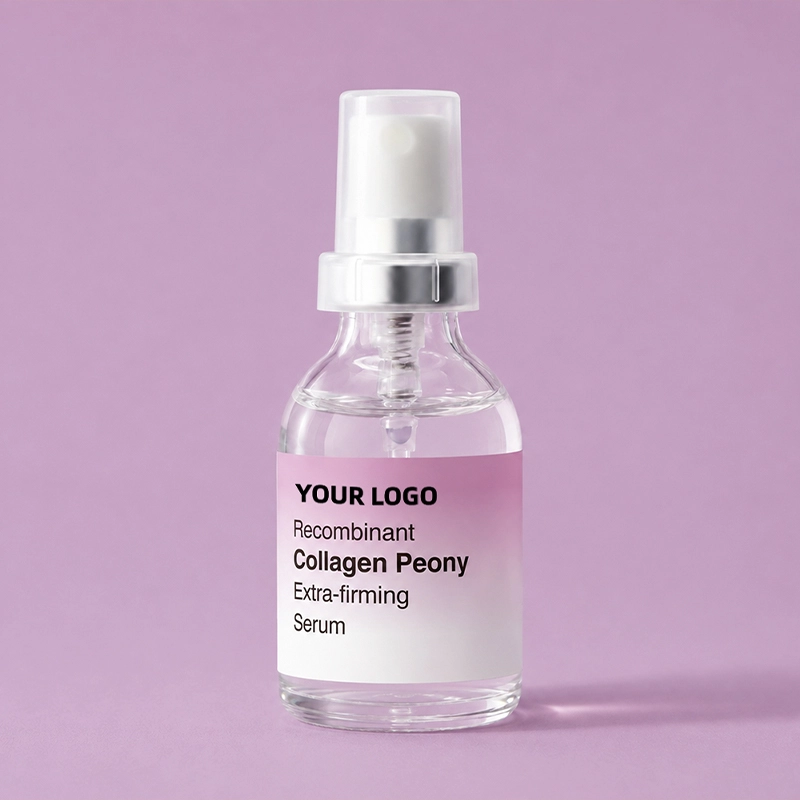
The peony extra-firming serum works night and day to help replenish collagen lost in the skin and delay skin aging. At night, combining the antioxidant power of peony extract with the structural repair ability of Recombinant Human Type lll Collagen,it helps support skin’s visible renewal and firming. Hyaluronic Acid helps lock in moisture. By day, this serum with an helps defend skin against visible effects of free radical damage from environmental sources like pollution.
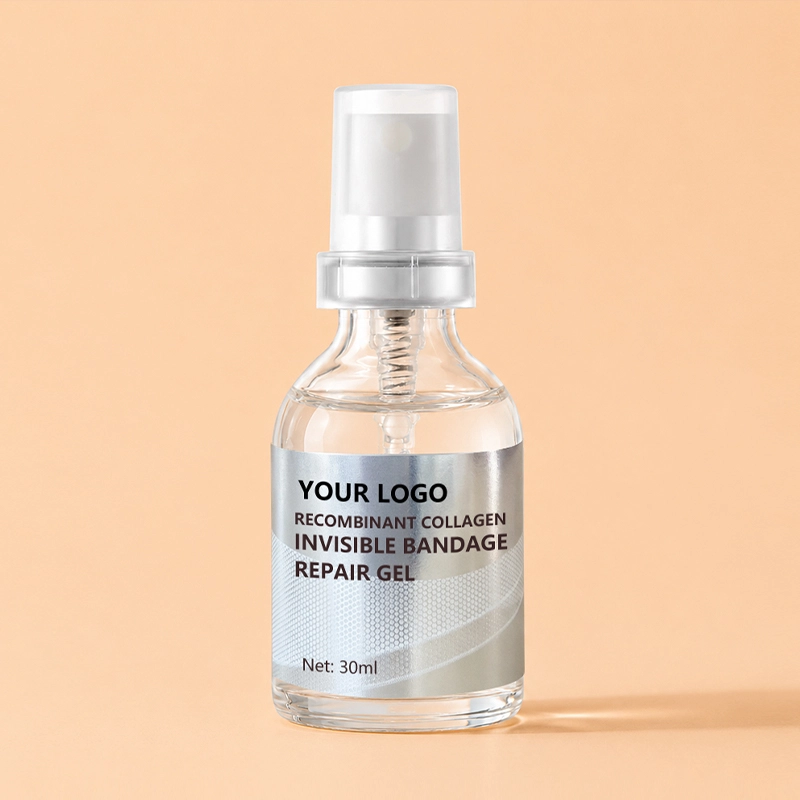
Once applied, it melts into an invisible shield, wrapping your skin like a "liquid bandage" to block out daily irritants.It delivers an instant, deep burst of hydration, melting away dryness, tightness, and that uncomfortable burning feeling.It also hits the fast-forward button on healing—fading acne marks, calming redness, and soothing stinging heat, all while locking in moisture for hours.
Call Us
+86 15810275256
HIGH-PERFORMANCE SKINCARE SOLUTIONS
RECOMBINANT HUMAN TYPE III COLLAGEN
Powered by recombinant human Type III collagen, we provide professional skincare solutions for skin repair, barrier care, anti-aging and customized OEM/ODM development.
- Aseptic packaging
- Medical Grade Daily Skin Care
- Premium skincare formulas