
Liquid Human Skin 1068
ContactOEM/ODM
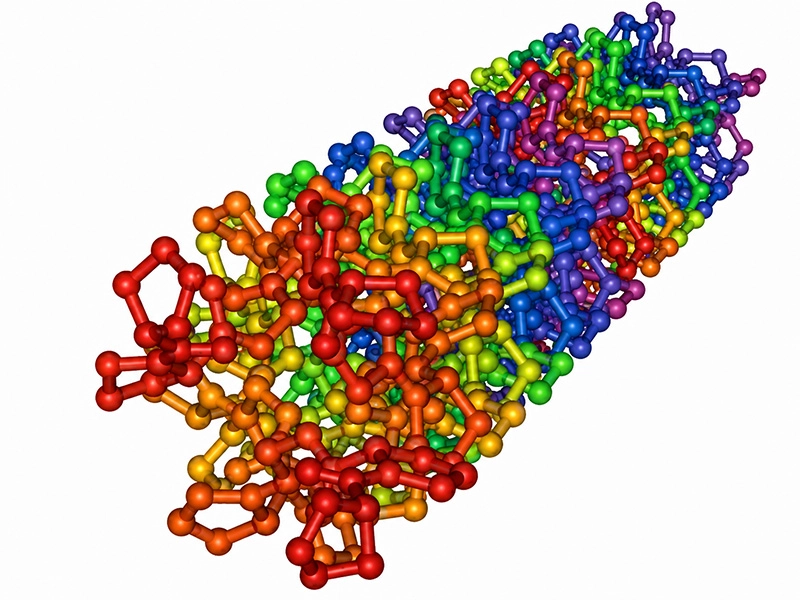
Collagen is one of the most important structural proteins in the skin. It provides strength and support to the skin and surrounding tissues, while also playing an essential role in tissue repair and regeneration.
Approximately 28 types of collagen have been identified in the human body. Among them, Type I and Type III collagen are the predominant forms found in the skin and together account for the vast majority of dermal collagen.
Collagen Loss and Skin Aging.One of the key changes associated with skin aging is the gradual loss and degradation of collagen in the dermis.
As collagen levels decline, the skin’s supportive collagen network becomes weaker and less organized. This can reduce skin firmness and elasticity, contributing to visible signs of aging such as fine lines, wrinkles, sagging, and loss of facial firmness.
Over time, the deterioration of the dermal collagen matrix can lead to a thinner and less resilient skin structure, making collagen maintenance an important part of healthy skin aging.
Support Youthful-Looking Skin by Replenishing What It Needs.
THE FIVE BENEFITS OF COLLAGEN PROTEIN
1.Hemostatic Support
Helps support the skin after minor surface damage, promoting a more stable skin condition and helping relieve discomfort.
2.Skin Repair
Helps replenish and support damaged skin, strengthen the skin barrier, and improve the appearance of compromised skin for a smoother, healthier-looking finish.
3.Structural Support
Collagen helps support the skin’s structural network, improving the appearance of fine lines while leaving the skin looking plumper, smoother, and more elastic.
4.Moisture Retention
Helps bind and retain moisture within the skin, improving hydration levels and leaving the skin feeling soft, supple, and firm.
5.Brightening
Helps improve the appearance of uneven skin tone, dark spots, and dullness for a brighter, more radiant complexion.
PRINCIPLES OF COLLAGEN REPAIR
When the skin barrier is compromised, moisture can escape more easily, while external irritants and microorganisms may penetrate the skin more readily. This can weaken the skin’s natural defense system and slow the recovery of damaged or stressed skin.
Recombinant collagen can self-assemble into a collagen fiber network on the surface of compromised skin, forming a protective physical barrier against external irritants. At the same time, it helps maintain a moist environment that supports the skin’s natural repair and regeneration processes.
Learn More
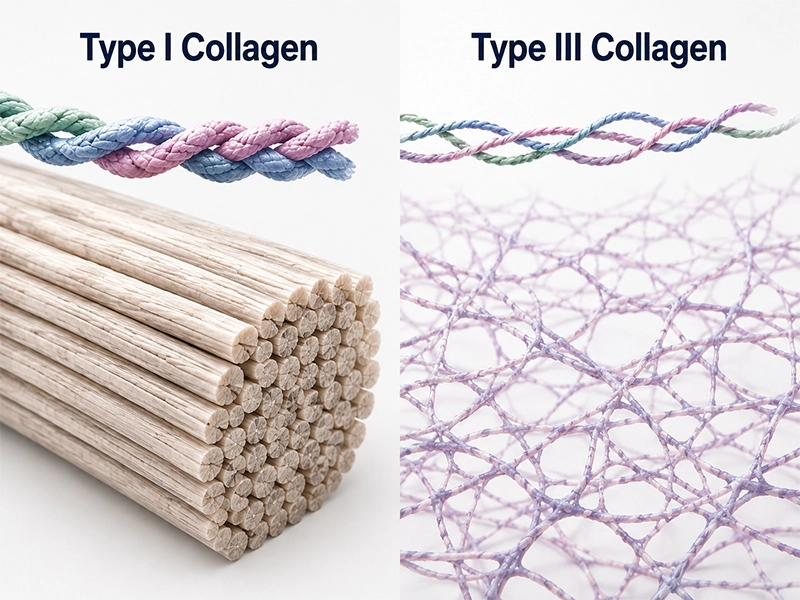
>TYPE I AND TYPE III COLLAGEN
Type I Collagen — The Primary Structural Collagen in Skin
Type I collagen accounts for approximately 80–85% of the collagen found in the dermis. It forms thick, tightly packed fibers that provide the skin with structural strength, firmness, and mechanical support.
Type I collagen also plays an important role in maintaining tissue integrity and supporting the skin’s natural repair process.
However, excessive or abnormal accumulation of Type I collagen during tissue repair may contribute to fibrosis and visible scar formation.
Type III Collagen — Supporting Skin Elasticity and Regeneration
Type III collagen forms a fine, loosely organized network within the skin. It is present at relatively high levels in infant skin and accounts for approximately 15–20% of collagen in adult skin.
It plays an important role in maintaining skin elasticity, softness, and tissue repair, while helping support the skin’s natural regenerative process.
Higher levels of Type III collagen are generally associated with finer, more flexible skin structure and may contribute to more balanced tissue remodeling with a lower tendency toward visible scar formation.
>THE DIFFERENCE BETWEEN ANIMAL SOURCES AND RECOMBINANT SOURCES
The Evolution of Collagen Production
Collagen has a long history of use and can be obtained from a variety of sources. Traditionally, one of the primary methods of obtaining collagen was extraction from animal tissues.
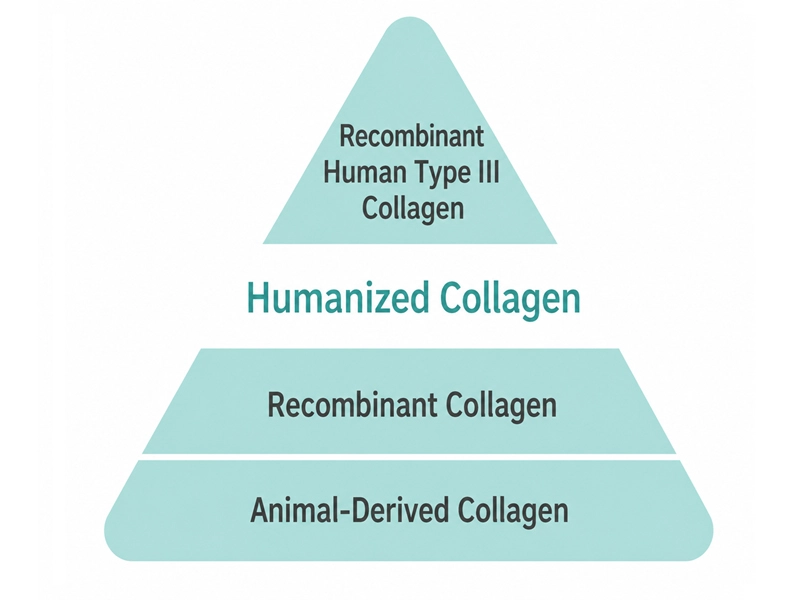
With continued advances in biotechnology, recombinant DNA technology and fermentation-based production have emerged as advanced approaches to collagen manufacturing, offering a more controlled and consistent alternative to traditional animal-derived collagen.
Source
Animal-Derived Collagen
Recombinant Collagen
Production Method
Extracted from animal tissues using chemical and enzymatic methods
Produced through genetic engineering and fermentation
Potential Viral Risk
Present
None
Allergic Reaction Risk
Present
Very Low
Water Solubility
Insoluble in Water
Readily Soluble in Water
pH
3.0–4.5
6.5–7.5
Denaturation Temperature
37–43°C
>72°C
Tissue Compatibility
Relatively Low
High
Advantages
Widely available sources; suitable for large-scale production
Highly homologous to human collagen;
high bioactivity; suitable for large-scale production
Disadvantages
Lower bioactivity; potential risks of viral contamination
and cytotoxicity
Higher Production Cost
>THE DIFFERENCE BETWEEN LONG COLLAGEN AND SHORT COLLAGEN
Type
Liquid Human Skin 1068
Short Peptides
Structure
Intact collagen peptide chains with a high molecular weight
Cleaved or degraded peptide fragments with a low
molecular weight
Application
Medical-Grade Collagen (Medical Device Grade)
Non-Medical Use (Cosmetic Grade)
Advantages
Provides structural support and retains comprehensive biological
activity
Good permeability and easier transdermal absorption
Limitations
Limited transdermal absorption due to its larger molecular size
Incomplete functional domains
Primary Function
Mainly forms a protective barrier on the skin surface, helping reduce
transepidermal water loss (TEWL)
and protect the skin from external contaminants such as bacteria,
viruses, and dust
Mainly provides skin-conditioning and nourishing
benefits, supporting the skin’snatural renewal process
Did You Know? High-Molecular-Weight Collagen Still Plays an Important Role in Skin Care
High-molecular-weight collagen does not need to penetrate deeply into intact skin to provide meaningful skincare benefits.
When the skin barrier is compromised, collagen can interact more closely with the affected surface and help create a supportive environment for the skin’s natural recovery process.
For daily skincare, high-molecular-weight collagen can form a moisture-retaining protective film on the skin surface, helping reduce moisture loss, protect against external stressors, and support a healthier skin barrier.
Through hydration and surface conditioning, it helps leave the skin feeling softer, smoother, and more resilient.
Learn More
100% Human-Homologous Sequence · Full-Length Peptide Chain of 1,068 Amino AcidsDuomeikang Biotechnology — Core Patented Technology
8 Years of R&D · Full-Length Recombinant Human Type III Collagen
After 8 years of dedicated research and development, Duomeikang Biotechnology successfully developed a large-scale yeast fermentation process using 30-ton fermentation tanks for the production of full-length Recombinant Human Type III Collagen with a complete peptide chain of 1,068 amino acids.
The resulting recombinant collagen features a full-length molecular structure, high molecular weight, and preserved functional integrity, providing a strong technical foundation for advanced skincare and skin-repair applications.
A New Standard for Premium Collagen
New Targets · New Structures · New Technologies · New Materials
Duomeikang Biotechnology has completed 110+ independent third-party testing and evaluation reports, covering multiple dimensions of product quality and performance.
From raw materials to finished formulations, and from efficacy evaluation to safety assessment, comprehensive quality control is implemented throughout the entire process to ensure consistent, reliable product quality.
Learn More
1. Human-Homology Transparency
D-NUTRIMEC Recombinant Human Collagen is designed with a 100% human-homologous amino acid sequence, identical to the corresponding human collagen sequence. This human-compatible design supports excellent biocompatibility and helps minimize the concerns associated with animal-derived collagen.
2. Collagen Type Transparency
D-NUTRIMEC clearly identifies its core collagen type as Recombinant Human Type III Collagen. With a clearly defined core ingredient and targeted functional properties, there is no ambiguity about the collagen type used in the formulation.
3. Source Transparency
Duomeikang Biotechnology is the direct manufacturer of the recombinant collagen raw material, enabling greater control over quality, safety, and traceability from the source.
4. Efficacy Transparency
D-NUTRIMEC products contain recombinant human collagen at functionally relevant levels—not merely for label claims or conceptual addition. The core ingredient and product performance are supported by clinical evaluation and efficacy testing to provide evidence-based product substantiation.
5. Quality Consistency Transparency
D-NUTRIMEC uses Water for Injection (WFI) and is manufactured under stringent cleanroom-controlled conditions. The production process incorporates microbial control and sterilization procedures, including Co-60 irradiation where applicable, to help maintain consistent product quality from raw material to finished formulation.
Quality consistency is controlled across:
Raw Materials · Formulations · Safety · Efficacy · Finished Products
Learn More
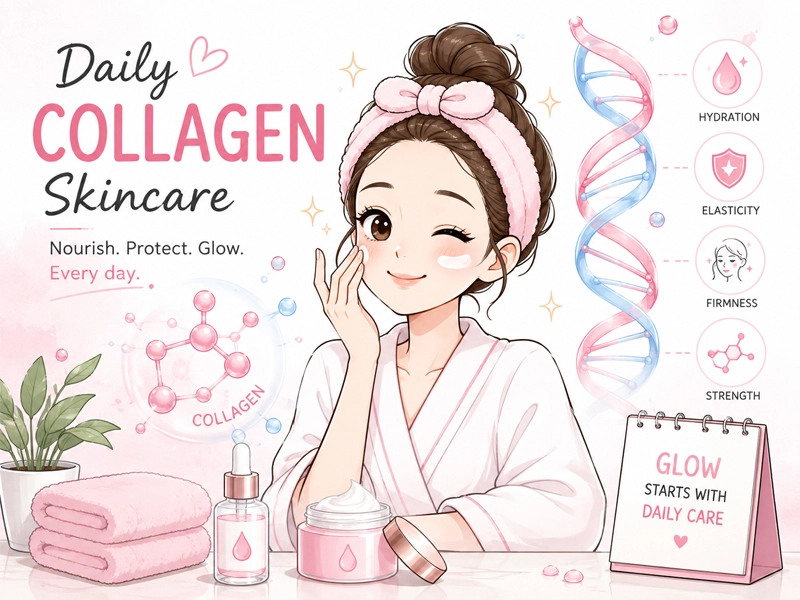
Collagen Loss & Visible Skin Aging
As we age, the skin’s natural collagen levels gradually decline. This loss of structural support is one of the key factors associated with visible signs of skin aging, including fine lines, wrinkles, dryness, dullness, uneven skin tone, and loss of firmness and plumpness.
Supporting the skin’s collagen environment, hydration, and barrier function can help maintain a smoother, firmer, and more youthful-looking complexion.
D-NUTRIMEC products are formulated with Recombinant Human Type III Collagen to provide targeted skincare support for aging and stressed skin.
The range helps:
Brighten dull-looking skin
Improve skin smoothness and texture
Lock in moisture for lasting hydration
Improve the appearance of fine lines
Support skin firmness and elasticity
Maintain a healthier-looking skin barrier
Did You Know?
D-NUTRIMEC products can be easily incorporated into your existing skincare routine and used alongside other skincare products.
D-NUTRIMEC Spray can be used in place of a toner.
D-NUTRIMEC Gel can be used as a serum step.
D-NUTRIMEC Ointment can be used as a moisturizer or cream step.
This flexible routine makes it easy to customize your skincare according to your skin’s needs.
Learn More
FAQ
What is the typical production lead time?
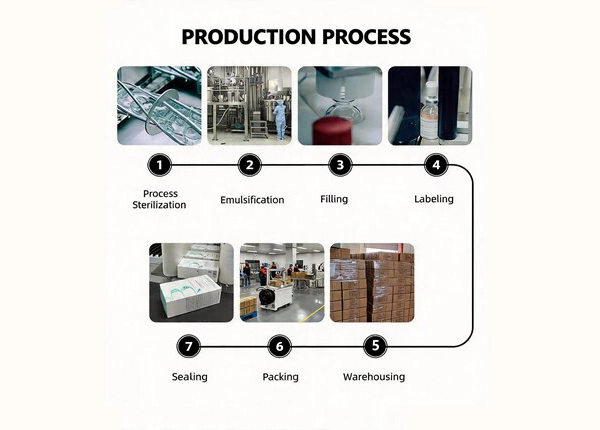
Lead time depends on the product type, sample approval, packaging confirmation, order quantity, and production schedule. Sample development is usually arranged first, followed by bulk production after final approval. Sample development usually takes 3 to 7 days, while bulk production may take 45 to 60 days, depending on the order quantity and project details.
Can D-nutrimec customize the formula, packaging, and logo?
Yes. We support custom formulation, texture adjustment, active ingredient direction, packaging selection, logo printing, label design, color matching, and retail box customization for private label skincare projects.
Can I get samples before placing a bulk order?
Yes. D-nutrimec can provide for your review before bulk production, so you can evaluate the formula, texture, packaging, and product concept. Sample preparation time and shipping time may vary depending on the product type and customization level.
What is the MOQ for private label skincare products?
D-nutrimec offers flexible MOQ options depending on the product type, formula, packaging, and customization requirements. For new brands or first test orders, our team can help you review suitable starting quantities before moving into bulk production. Contact D-nutrimec to discuss the product you want to customize, and we will provide detailed support based on your project needs.